Why Reservation Systems Matter More Than You Think

Reservations influence preparation, service flow, and guest experience far more than most restaurants realise.
Table of contents
Every weekend, 19% of restaurant reservations in the UK end in a no-show. Each one costs the operator £89 on average, according to Barclaycard Payments (May 2023). That is not an empty seat. It is prepped food, a staffed kitchen, and a table that could have been sold twice. Multiply that across 30 covers on a Friday night, and the math turns ugly fast.
But no-shows are only the surface problem. The deeper issue is that most restaurants still treat reservations as calendar entries when they should be treated as operational infrastructure. The system you book guests through determines whether you own your guest data, whether your kitchen gets accurate dietary information, and whether a repeat guest ever returns.
At a Glance
- No-show rate without a deposits policy: 15-20%. With prepayment: 0.9% (Tock, 2024)
- 65% of diners now book directly on a restaurant's own website (Toast, 2025)
- 60% of restaurant revenue comes from repeat guests (Olo, 2024)
- 53.9% of food allergy reactions at restaurants occurred despite staff being told about the allergy (Frontiers in Allergy, 2023)
- In 2024-2025, reservation platforms were acquired for a combined $1.6 billion: SevenRooms ($1.2B, DoorDash) and Tock ($400M, AmEx)
Table of Contents
- The No-Show Problem: What It's Actually Costing You
- Who Owns Your Guest?
- Dietary Data Is a Safety Obligation, Not a Preference Field
- Repeat Guests Are the Business
- Choosing the Right System: Platform Comparison
- The $1.6 Billion Signal
- What Good Reservation Infrastructure Actually Enables
- Frequently Asked Questions
- Related Reading
The No-Show Problem: What It's Actually Costing You
Barclaycard Payments surveyed UK hospitality operators in May 2023 and found that each no-show costs a restaurant £89 on average, with 19% of all reservations ending that way. One in five hospitality owners told the same survey they had considered permanent closure as a result. That is not a rounding error. It is an industry-wide structural wound.
The cost is not just the lost cover. It is everything that happened before the guest did not arrive. The kitchen pre-prepped those dishes. The team was staffed for that service level. The table sat locked in a confirmed slot, invisible to any walk-in who might have taken it. That resale window is gone.
The fix is simpler than most operators expect. Tock's internal data, tracking reservations from December 2023 through March 2024, shows that venues with no policy see 15-20% no-show rates. A credit card hold brings that to around 3%. A prepayment deposit brings it to 0.9%. That is a 94% reduction in no-shows, from requiring a commitment the guest was presumably already willing to make.
There is a hospitality concern here that operators raise often: will a deposit requirement reduce bookings? The evidence does not support that fear. Guests who cancel early free the table for resale. Guests who show up have already committed. The deposit does not deter serious diners. It filters out guests who were never fully committed to begin with.
Citation Capsule: UK restaurants lose £89 per no-show on average, with 19% of all reservations resulting in no-shows according to a Barclaycard Payments/One Poll survey of hospitality operators (May 2023). Tock's internal data (Dec 2023-Mar 2024) shows venues using prepayment deposits reduce no-show rates to 0.9%, compared to an industry baseline of 15-20% without any policy.
Who Owns Your Guest?
Toast's 2025 Reservation Data Report found that 65% of diners now book directly on a restaurant's own website, with direct bookings rising from 20% to 29% between reporting periods while OTA-sourced bookings fell from 39% to 34%. That shift is significant, but the fee structures of the major platforms have not moved with it.
OpenTable charges restaurants $1.00 to $1.50 per cover for bookings that come through the OpenTable network. At 3,000 covers per month (a reasonable volume for a busy venue), that is up to $54,000 per year in per-cover fees alone, on top of monthly subscription costs ranging from $149 to $499. The restaurant gets the cover. OpenTable keeps the guest profile.
That last part is the problem. When a guest books through a third-party platform, the behavioural data (how often they dine out, what they order, which restaurants they visit) belongs to the platform. The restaurant gets a name and a time. The platform gets a data asset.
Restaurant operators in Southeast Asia frequently chose OTA platforms early because the discovery value seemed worth the cost. Years later, the discovery value has declined as direct booking behaviour grows, but the fee structures remain. The relationship with the guest was never built.
The question every operator eventually faces is whether to pay per cover indefinitely and own nothing, or invest in infrastructure that builds a direct relationship. One is a rental. The other is ownership.
Citation Capsule: Toast's 2025 Reservation Data Report found 65% of diners book directly on a restaurant's website, with direct booking share rising from 20% to 29% as OTA bookings fell from 39% to 34%. OpenTable charges $1.00-$1.50 per network cover, meaning a restaurant processing 3,000 covers per month could pay more than $36,000 annually in cover fees, without owning the resulting guest data.
Dietary Data Is a Safety Obligation, Not a Preference Field
A peer-reviewed study published in Frontiers in Allergy (2023) found that 25% of anaphylactic reactions happen in restaurants. More troubling: 53.9% of those reactions occurred despite the guest having already notified restaurant staff about their allergy. The information was provided. The reaction happened anyway.
This is not a training failure in isolation. It is a relay chain failure. The guest tells the host. The host tells the server. The server tells the kitchen: sometimes in writing, often verbally, occasionally not at all. Each handoff is a point where the information can degrade, be misheard, or simply not reach the right person before the wrong dish leaves the pass.
Structured booking-stage dietary data breaks the chain before service begins. When a guest's allergy is recorded as a structured field at the time of booking (not a free-text note, but a tagged, categorised data point), it can appear automatically on the kitchen prep sheet, on the floor plan, and on the server's run sheet without a single verbal relay.
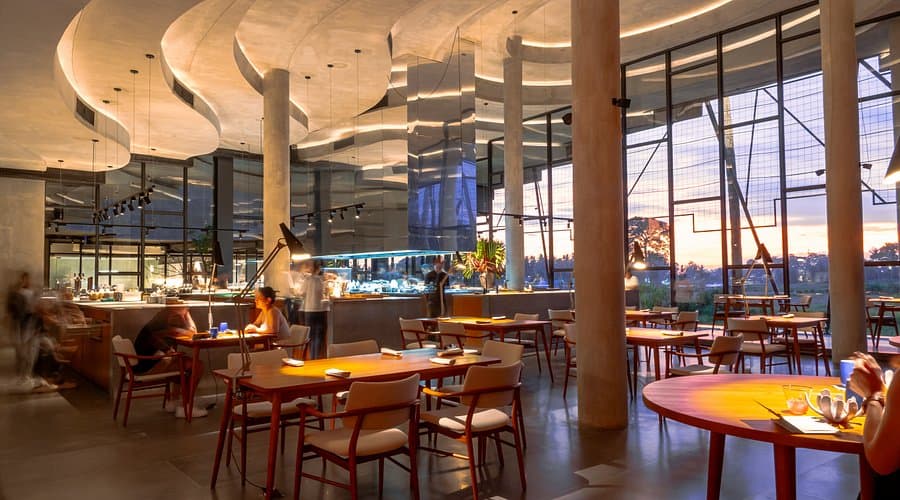
Locavore NXT in Ubud runs Revasi with dietary fields configured to their specific menu structure. Allergies flagged at booking are surfaced directly to kitchen teams as part of the pre-service brief, without requiring the front-of-house team to re-communicate them manually. The relay chain is replaced by a data flow.
This is why dietary data collection should not be an optional add-on or a notes field. It is a core operational function that reservation infrastructure either supports properly or forces teams to manage manually under service pressure.
Citation Capsule: Research published in Frontiers in Allergy (peer-reviewed, 2023) found that 25% of anaphylactic reactions occur in restaurants, with 53.9% of those reactions happening despite restaurant staff having been notified of the guest's allergy. The failure point is the relay chain between booking, front-of-house, and kitchen: a gap that structured, booking-stage dietary data is designed to close.
Repeat Guests Are the Business
Olo analysed data across more than 100 million guest records and found that 60% of restaurant revenue comes from repeat guests. Those guests spend 67% more per visit than first-time diners, according to research cited by SevenRooms and OpenTable. The economics of hospitality are not built on acquisition. They are built on return.
The challenge is that return requires recognition. A guest who dined twice last quarter, always requested a corner table, and celebrated their anniversary with you last May is your most valuable guest. But only if you know that. A reservation system is the only pre-purchase touchpoint where that information can be systematically captured.
The POS records what a guest spent. The reservation system records who they are, why they came, and whether they are likely to return. These are different datasets, and only one of them enables proactive outreach before the next visit.
Bloom Intelligence's 2025 research is stark on what happens without that outreach. Without direct marketing based on guest data, only 8% of first-time restaurant guests return. With it, that rate rises to 17%. Still low in absolute terms, but more than double. For a restaurant doing 500 covers per month, the difference between 8% and 17% retention compounds fast.
Citation Capsule: Olo's analysis of more than 100 million guest records found that repeat guests account for 60% of restaurant revenue and spend 67% more per visit than first-timers. Bloom Intelligence (2025) found that without direct marketing based on guest data, only 8% of first-time guests return to a restaurant, rising to 17% with targeted outreach.
Choosing the Right System
With direct bookings rising and per-cover fees compounding, the platform decision matters more than it did five years ago. The table below reflects the current landscape for operators in Southeast Asia and globally.
| Platform | Best For | Pricing Model | Per-Cover Fee | Data Ownership | APAC Presence |
|---|---|---|---|---|---|
| OpenTable | Volume-driven restaurants wanting discovery | $149-$499/mo subscription | $1.00-$1.50 per network cover | Platform retains | Moderate (AU, limited Asia) |
| Resy + Tock (AmEx) | Urban fine dining; AmEx cardholders | ~$249-$899/mo flat | None | Restaurant owns | Minimal outside US |
| SevenRooms (DoorDash) | Hotel F&B; large hospitality groups | ~$500+/mo custom | None | Restaurant owns | Limited; growing |
| Quandoo | Mid-market, discovery-focused | ~$49-$99/mo + cover fee | ~$3.50 per Quandoo booking | Limited | Singapore, AU, 11 countries |
| Revasi | High-end restaurants in SEA and globally; multi-venue groups | Contact for pricing | None on direct bookings | Restaurant owns | Southeast Asia focus |
A few things worth noting on this comparison. SevenRooms and Resy both offer restaurant-owns-data models, which is a meaningful improvement over OpenTable's structure. The distinction is where traffic originates. If guests book through the SevenRooms discovery layer, DoorDash sees that data. If they book through a direct Revasi widget embedded on the restaurant's own site, the restaurant sees it.
Quandoo's per-cover fee of approximately $3.50 per booking is the highest in the table. For a restaurant doing 400 Quandoo covers per month, that is $1,400/month in fees on discovery bookings alone.
For operators in Southeast Asia specifically, APAC presence matters for more than just technical support. It means the platform understands local payment methods, regional compliance requirements, and the service expectations of guests in that market.
The $1.6 Billion Signal
In 2025, DoorDash acquired SevenRooms for $1.2 billion. In 2024, American Express acquired Tock for $400 million. OpenTable has a deep integration partnership with Uber Eats. These are three of the largest recent transactions in the reservation platform space, and none of them were made by hospitality companies. (CNBC, 2025; Entrepreneur, 2024)
DoorDash is a delivery company that needed restaurant guest data. AmEx is a financial services company that needed high-frequency, high-value dining behaviour data to strengthen its cardholder rewards proposition. Uber needed to understand how its food delivery users behave when they dine in person.
These acquisitions are not about improving the booking experience. They are about owning the data asset that reservation systems generate: who dines where, how often, with whom, at what spend level, and across which categories of restaurant. That profile is worth more than the software subscription revenue.
The implication for restaurant operators is direct. The platform you use to manage reservations is also the platform that accumulates insight about your guests. When that platform is acquired by a delivery aggregator or a credit card network, the terms of that accumulation can change. The restaurant's ability to access, port, or act on its own guest data depends entirely on what the contract allows.
The $1.6 billion in acquisitions signals that the reservation industry is entering a consolidation phase driven by data strategy, not hospitality innovation. Operators who have not negotiated explicit data ownership and portability terms in their platform contracts may find themselves locked into relationships that were not designed with the restaurant's interests at the centre.
Running multiple venues or a high-end single concept? Revasi is built for restaurants that want to own their guest data, not rent access to it. Book a demo →
What Good Reservation Infrastructure Actually Enables
Most coverage of reservation systems focuses on what they prevent: no-shows, double-bookings, last-minute chaos. That framing undersells what a well-configured system actively enables when it is treated as operational infrastructure rather than just scheduling software.
Kitchen preparation and dietary intelligence. When dietary data is captured at booking as structured fields (not notes, but categorised information), it flows directly into pre-service prep. The kitchen knows before service begins, not when the guest is seated. For tasting menu restaurants like Locavore NXT, where a single allergy can affect eight courses, that upstream accuracy is the difference between a smooth service and an improvised one.
Recognition and personalisation. A guest who has dined with you four times in eighteen months should not be treated like a first-time visitor. Reservation systems that track visit history, seating preferences, and occasion notes allow front-of-house teams to greet returning guests with context. That recognition is not about being clever. It is about making guests feel that the relationship is mutual.
Multi-experience booking. High-end restaurants increasingly operate across multiple revenue formats: the main dining room, a chef's table, private dining rooms, cooking classes, and curated pairing events. Each has different capacity constraints, pricing structures, and preparation requirements. A system that handles these within a single operational environment (rather than across disconnected tools) reduces administrative overhead and reduces the chance of booking conflicts.
Capacity management between reservations and walk-ins. Not every seat should be pre-reserved. Cocktail bars and high-traffic concepts depend on walk-in flow for energy and spontaneity. The challenge is managing the ratio in real time. Good reservation infrastructure shows a live floor view that reflects both confirmed bookings and available capacity, allowing floor managers to accept walk-ins without over-committing, and to hold back tables for high-value last-minute requests.
Frequently Asked Questions
What is a restaurant reservation system?
A restaurant reservation system is software that manages guest bookings across one or more dining venues. Beyond scheduling, modern systems capture guest data, dietary requirements, payment deposits, and occasion notes. They integrate with floor planning, kitchen prep workflows, and post-visit marketing. The best systems give the restaurant full ownership of the data they generate.
What is the financial cost of restaurant no-shows?
Each no-show costs a UK restaurant £89 on average, according to Barclaycard Payments (May 2023). That figure reflects pre-prepped food, staffed kitchen time, and the lost opportunity to resell the table. At a 19% no-show rate (the UK industry average), a restaurant doing 200 covers per week loses the equivalent of 38 covers every week to no-shows.
Do online reservation systems reduce no-shows?
Yes, significantly. Tock's internal data (December 2023 through March 2024) shows that venues using prepayment deposits see no-show rates of 0.9%, compared to 15-20% at venues with no policy. A credit card hold alone reduces no-shows to around 3%. The mechanism is commitment: guests who have paid or authorised a charge follow through at far higher rates.
Why does data ownership matter for restaurant reservation platforms?
When a guest books through a third-party platform like OpenTable, the platform retains the guest's profile data: dining frequency, preferences, and behavioural patterns. The restaurant gets the booking. This matters because guest data is the foundation of repeat visit marketing. A 2025 Bloom Intelligence study found that direct marketing based on guest data more than doubles first-time guest return rates, from 8% to 17%.
How does a reservation system help with dietary restrictions?
Structured dietary data collection at the booking stage replaces the verbal relay chain (diner to host to server to kitchen) that causes most allergy incidents. Research in Frontiers in Allergy (2023) found that 53.9% of food allergy reactions at restaurants occurred despite staff being told about the allergy. Systems that tag and route dietary data automatically reduce the risk of that information being lost between booking and service.
What is the best restaurant reservation system for Southeast Asia?
The right platform depends on venue type and operational needs. For high-end restaurants in Southeast Asia that want to own their guest data and manage multiple booking types (dining, private events, experiences), Revasi is built specifically for this market. For operators who need broad regional discovery and accept per-cover fees, Quandoo has presence across Singapore, Australia, and 11 countries. OpenTable has moderate presence in Australia but limited reach across Southeast Asia.
How does Revasi differ from OpenTable or SevenRooms?
Revasi is built for high-end restaurants in Southeast Asia and globally that want direct booking as the default, not the exception. There are no per-cover fees on direct bookings. The restaurant owns its guest data. The system is configurable to the venue's specific service structure, including dietary data fields, multi-experience booking, and multi-venue management. OpenTable's primary value is discovery network traffic, with data retained at the platform level. SevenRooms (now owned by DoorDash) offers restaurant data ownership but operates primarily in the US and European markets.
Related Reading
- Locavore NXT: How Asia's 50 Best Restaurant Handles Dietary Intelligence at the Booking Stage
- Why Locavore Group Uses One Reservation System Across All Their Restaurants
- How to Choose a Restaurant Reservation System in Asia
Revasi is a restaurant reservation platform designed for high-end restaurants in Southeast Asia and globally. This post was written by Regilio, Co-founder of Revasi.

Regilio
Co-founder, Revasi
Passionate about the intersection of hospitality and technology. Helping restaurants discover digital tools to transform their dining room experiences and turn first-time guests into regulars.